When "Reading" Tests Only Test One Way to Read: What Dyslexic Learners Teach Us About Assessment
Picture this: two students approach the same text. One reads quickly, pronounces words correctly, and finishes the passage in record time. The other reads slowly, sometimes hesitates, and takes twice as long to get through the same material. When test time comes, guess who gets labeled as the “struggling reader”?
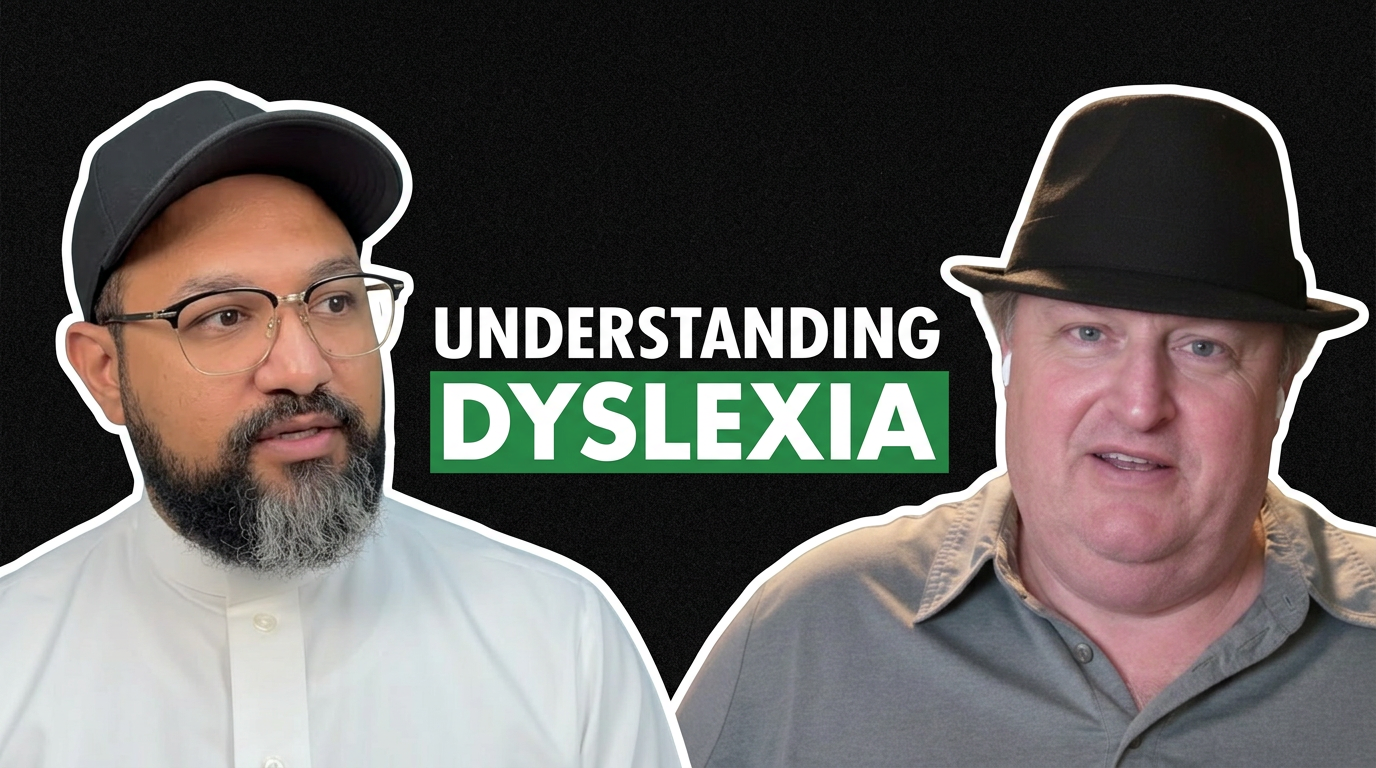
If you guessed the slower student, you’ve just witnessed how our assessment systems mistake the route for the destination. And according to Russell Van Brocklen, the Dyslexia Professor whose work challenges families to move beyond “wait and see” approaches, this confusion isn’t just unfair. It’s erasing entire ways of knowing.
The Highway Metaphor: Different Routes, Same Destination
Van Brocklen uses a simple but powerful metaphor to explain what’s happening in our reading assessments. Imagine reading comprehension as a destination: let’s call it “Understanding City.” Most reading tests measure traffic on one highway leading there: the rapid decoding expressway. They count cars, measure speed, and declare that highway traffic equals total transportation.
But what about the readers taking the scenic route? The ones who arrive via careful analysis, deep questioning, and methodical word-by-word construction of meaning?
“The destination is understanding: comprehension, analysis, interpretation, and the ability to use what has been read,” Van Brocklen explains. “The route is the method by which a reader gets there.” For dyslexic readers—who may represent 15-20% of all learners—that route often looks different. It might involve more conscious analysis, more articulation, and more effortful organization of words and meaning.
The problem isn’t that these readers can’t reach the destination. It’s that our measurement systems only recognize one road.
When Tests Confuse Surface for Depth
Here’s where things get interesting for anyone who cares about what reading actually means. Van Brocklen draws on literary criticism, specifically Wayne Booth’s work on narrative reliability, to make a crucial distinction. A narrator might speak hesitantly, contradict themselves on small details, or use broken syntax, and still be completely reliable in their account of events.
The same logic applies to readers.
“The surface is what is immediately visible: speed, fluency, spelling, pronunciation, handwriting, and oral performance,” Van Brocklen notes. “The depth is comprehension, analysis, interpretation, and the ability to apply what has been read.”
Assessment systems routinely confuse these two levels. They treat a reader who is slow, hesitant, or inaccurate on the surface as though they lack deeper understanding. But what if that hesitation signals careful thought? What if that slower pace reflects a more thorough analysis?
A Case Study in Alternative Routes
Consider Casey, a ten-year-old fifth-grader reading at a second-grade level but fascinated by Theodore Roosevelt. Instead of drilling her with grade-level readers, Van Brocklen assigned her The Rise of Theodore Roosevelt—a complex biography written far above her tested reading level.
The process was methodical: Casey listened to the audiobook while following along in the text, always pursuing a focused question like “What did Theodore Roosevelt want to do?” Every unknown word became a learning opportunity—she’d type it, look it up, select the appropriate definition, and return to the text.
It took months of intensive work, but Casey eventually mastered both the vocabulary and the complex ideas. More importantly, she developed a sustainable approach to challenging texts that matched how her brain actually processes information.
“The important point is that her progress came through interest, repetition, structure, and a pathway that matched how she learned,” Van Brocklen emphasizes. No amount of traditional remediation could have achieved what this interest-driven, cognitively-aligned approach accomplished.
The ADHD Connection (And Difference)
Van Brocklen offers a useful distinction for understanding the overlap between dyslexia and ADHD. Both groups of students might describe having “ideas flying around their heads at high speed with little organization.” But dyslexic students often report a specific phenomenon: the idea exists clearly in their mind, but the moment they try to write it down, it vanishes.
This isn’t about attention or organization in general, it’s about the specific cognitive pathway between thought and written expression. Understanding this difference matters for designing appropriate support systems.
What “Building the Second Road” Actually Means
Critics might worry that accommodating different cognitive routes means lowering standards. Van Brocklen’s response is direct: “This is not about lowering standards. In many cases, I ask students to do more demanding work, not less.”
He describes working with students on complex texts like Walt Disney: The Triumph of the American Imagination for months or even years. The goal isn’t to make tasks easier—it’s to teach students how to analyze words, build meaning, and articulate understanding through methods that align with their cognitive strengths.
“When a student can identify what adults missed in a text, explain it clearly, and apply that understanding, that is rigor,” he argues. “It may not look like a standard reading worksheet, but it is not a lower standard. It is a different route to a demanding intellectual outcome.”
When Assessment Becomes Enforcement
Perhaps the most crucial insight from this conversation is recognizing when assessment systems stop describing ability and start enforcing narrow cognitive norms. Van Brocklen suggests this happens “when the test claims to measure reading but only measures one narrow part of reading.”
The consequences extend far beyond individual test scores. When institutions define reading through a single pathway, they’re not just misdiagnosing struggling readers; they’re determining who gets to count as literate, who deserves advanced instruction, and whose ways of making meaning matter.
The Bigger Question
This conversation raises fundamental questions about how we understand human cognitive diversity. If 15-20% of learners process text differently, should we treat their approaches as deficits to be remediated, or as legitimate alternatives to be supported?
The answer matters for more than just educational policy. It shapes how we think about intelligence, capability, and what counts as valuable ways of engaging with complex ideas.
Ready to dive deeper into this conversation about reading, assessment, and cognitive diversity? Listen to the full episode of Reading the World to hear more of Russell Van Brocklen’s insights on structured literacy, the neuroscience of dyslexic reading, and practical strategies for supporting diverse learners. Because understanding how we read the world starts with recognizing that there’s more than one way to get there.